
Could You Retire Sooner Than You Think?
You may be closer than you realize.
Many Tennessee higher education employees assume retirement is still years away because they've estimated their retirement income using the traditional 4% withdrawal rule or simply looked at their current retirement account balance.
But your retirement income options may be very different than you think.
Depending on your retirement accounts, your age, and your retirement goals, there may be strategies that can provide significantly more retirement income than many people expect.
The first step is understanding what's actually available to you.

Why Many People Underestimate Their Retirement Income
It's common for someone to log into their retirement account, see the balance, and think:
"If I have $1,000,000, I can probably withdraw about 4% each year."
That may be one approach.
But it isn't the only approach.
Many retirees are surprised to learn there are retirement income strategies specifically designed for people whose primary goal is dependable lifetime income rather than continuing to assume market risk throughout retirement.
Every situation is unique.
The goal isn't to recommend the same strategy for everyone.
The goal is understanding which approach best fits your retirement.
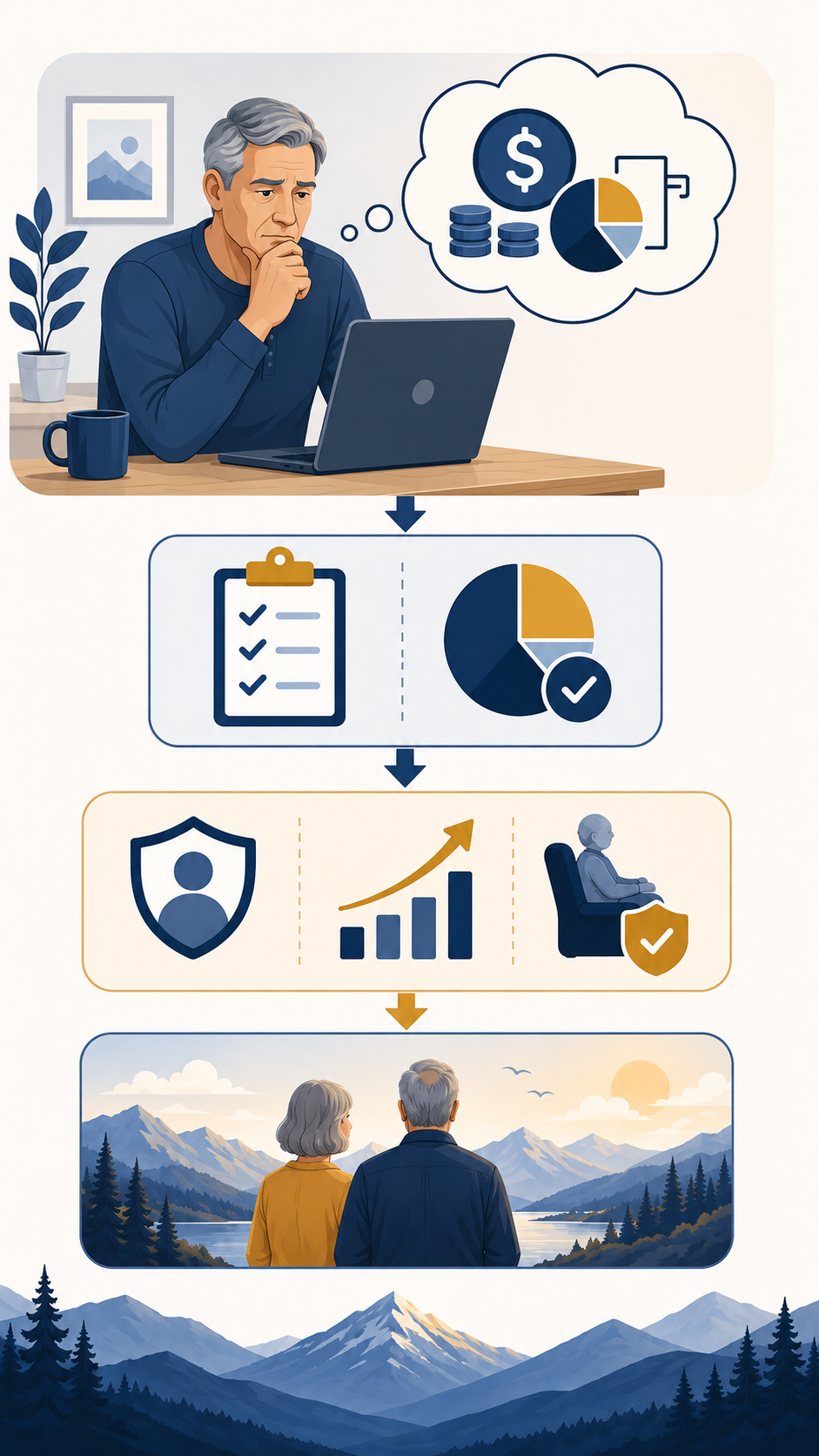
One Professor's Story -
One Professor's Story
One Professor's Story - One Professor's Story

I recently worked with a Tennessee higher education professor who believed retirement was still another semester away.
As we reviewed everything together including retirement accounts, Social Security timing, and retirement income options we discovered choices that hadn't previously been considered.
After seeing the complete picture, that professor decided to retire one semester earlier than originally planned, with greater confidence and peace of mind.
Every retirement is different.
Sometimes simply understanding all of your available options changes everything.
Are You Looking at Your Complete Retirement Picture?
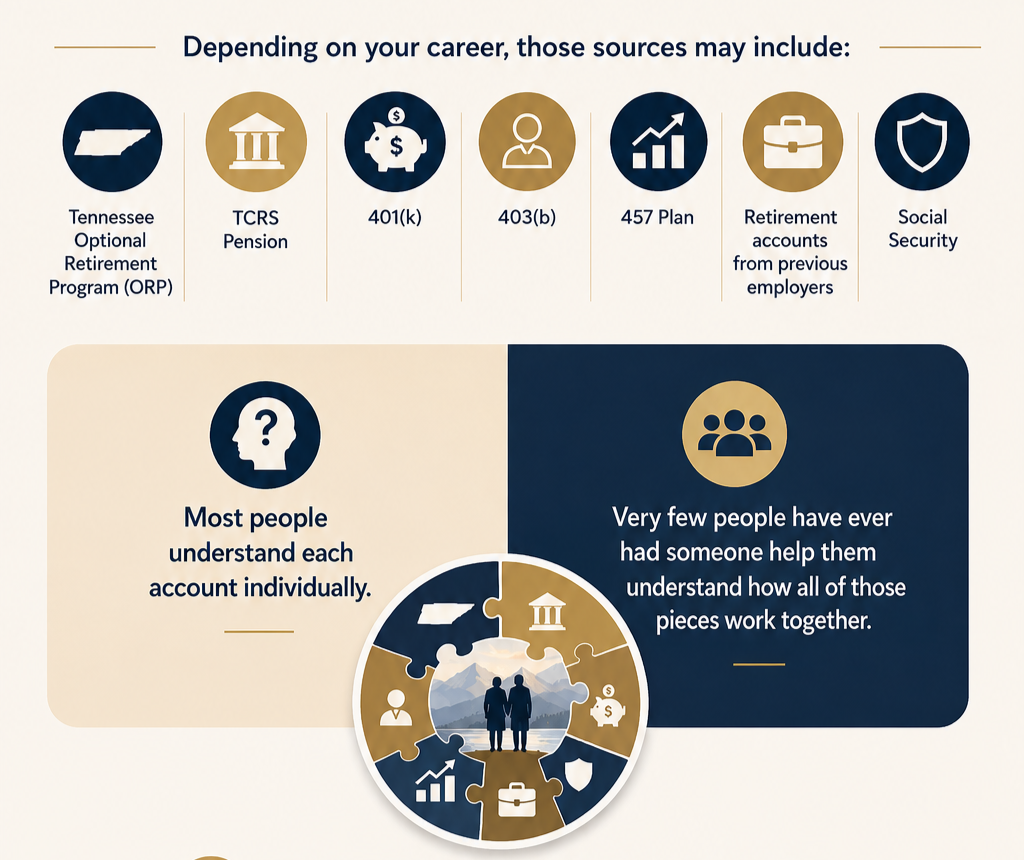
Your retirement income may eventually come from several different places.
Depending on your career, those sources may include:
Tennessee Optional Retirement Program (ORP)
TCRS Pension
401(k)
403(b)
457 Plan
Retirement accounts from previous employers
Social Security
Most people understand each account individually.
Very few people have ever had someone help them understand how all of those pieces work together.
A Common Misunderstanding
One conversation I have fairly often goes something like this:
"HR told me my pension is calculated using Years of Service × Final Average Salary × Benefit Multiplier."
That formula applies to many traditional pension plans.
However, if you're participating in Tennessee's Optional Retirement Program (ORP), you generally do not have a traditional pension calculated using that formula.
Instead, your retirement income will largely depend on the retirement accounts you've built throughout your career and
the decisions you make when you begin taking income.
Understanding those choices before retirement can make a significant difference.

Many people know how much they've saved.
Far fewer know what those savings may actually be capable of producing as retirement income.
For example...
Many financial articles reference the 4% Rule, suggesting someone with a $1,000,000 retirement portfolio might withdraw approximately $40,000 per year.
That is certainly one approach.
However, depending on your age, objectives, health, and retirement goals, there may be other strategies capable of producing significantly more guaranteed lifetime income.
The purpose of a retirement income review is simply to help you understand what options are available.
Compare More Than One Company's Solutions
If your retirement savings are currently invested with a provider such as TIAA, Corebridge, or Voya, it's natural that most of the retirement options you see come from that provider.
An independent retirement income review allows you to compare retirement income strategies from more than 15 highly rated insurance companies.
Sometimes your current provider remains the best fit.
Sometimes another solution better matches your retirement goals.
Either way, you'll make decisions with a much clearer understanding of your options.